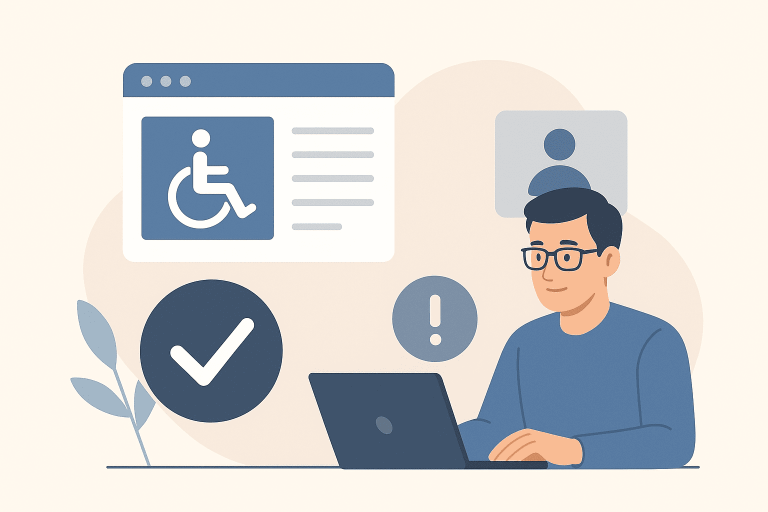
In 2025, building a successful website goes beyond aesthetics and speed. The focus shifts to inclusion and legal compliance. Web Accessibility, guided by the WCAG (Web Content Accessibility Guidelines), is the new pillar that unites ethics, Google ranking (SEO), and the legal obligation imposed by the Brazilian Inclusion Law (LBI) and, indirectly, the LGPD (General Data Protection Law).
Ignoring accessibility is not just an ethical failure; it is a business risk that can result in the loss of organic traffic and substantial fines. This definitive guide explores the intersection between Inclusive Design and cutting-edge digital strategies.
The Legal Mandate: WCAG, LBI, and the Risk of Fines
Digital accessibility in Brazil is not an option but a legal requirement, especially for companies that offer services to the public.
1. WCAG (Web Content Accessibility Guidelines)
WCAG is the internationally recognized standard, developed by the W3C (World Wide Web Consortium), that establishes the technical guidelines for making web content accessible to people with disabilities [1]. The latest guidelines (WCAG 2.2) are the practical guide for developers and designers.
2. Brazilian Inclusion Law (LBI – Law No. 13.146/2015)
LBI, also known as the Statute of the Person with Disabilities, ensures the right to accessibility in all media, including digital [2]. It establishes that websites maintained by companies headquartered or commercially represented in the country, or that offer services in Brazil, must be accessible.
Risk of Fines: Non-compliance with the LBI can lead to lawsuits and fines that vary according to the size of the company and the damage caused to society, with the number of companies fined for lack of digital accessibility growing annually [3].
3. The Indirect Connection with LGPD
Although the LGPD (General Data Protection Law) does not directly address accessibility, it reinforces the need for Inclusive Design. LGPD requires that the processing of personal data be done fairly and transparently. An inaccessible website creates a barrier to transparency and can be seen as a failure in the duty of care to the user, especially in consent forms [4].
Web Accessibility as an SEO Strategy
Google does not declare WCAG compliance as a “direct ranking factor.” However, the pillars of accessibility directly overlap with key SEO factors, making Inclusive Design a powerful ranking strategy.
|
Accessibility Pillar (WCAG)
|
Direct SEO Benefit
|
|
Alternative Text (Alt Text) for Images
|
Allows Google to understand visual content, improving ranking in image search and content relevance [5].
|
|
Semantic Structure (H1, H2 Tags, Lists)
|
Helps screen readers and, crucially, Google’s crawlers to understand the hierarchy and main topic of the page, improving scanability and Information Architecture.
|
|
Captions and Transcriptions for Media
|
Makes video and audio content crawlable and indexable by Google. Transcribed content acts as additional high-quality text.
|
|
Consistent and Focused Navigation
|
Improves User Experience (UX), reducing the bounce rate and increasing the dwell time — positive ranking signals.
|
|
Responsive Design and Contrast
|
Ensures the site is usable on all devices and lighting conditions, indirectly meeting the Core Web Vitals requirements (LCP and CLS) [6].
|
Practical Inclusive Design Checklist
Custom Site Pros recommends that when developing or redesigning a website, the following accessibility points should be prioritized:
1.Color Contrast: Use tools to ensure that the contrast between text and background meets the WCAG 2.2 AA level.
2.Keyboard Navigation: Make sure all interactive elements (links, buttons, forms) can be accessed and operated only with the keyboard (using the Tab key).
3.Accessible Forms: All form fields must have associated labels (<label>) and clear, audibly announced error messages for screen readers.
4.Use of ARIA: Use ARIA (Accessible Rich Internet Applications) attributes to provide additional information to assistive technologies about dynamic or complex elements (such as sliders or dropdown menus).
5.Simple Language: Content should be written clearly and concisely, facilitating understanding for all users.
Conclusion: The Investment That Generates Return
Investing in Web Accessibility, following WCAG guidelines, is a strategic move that offers a dual advantage:
•Legal Protection: Ensures compliance with the LBI, mitigating the risk of fines and lawsuits.
•Competitive SEO Advantage: Improves the technical quality of the site, user experience, and content optimization, boosting Google ranking.
An Inclusive Design is, ultimately, an Intelligent Design. It expands your target audience, improves your brand reputation, and ensures your site is seen by Google as a high-quality resource.
Don’t put accessibility off. Talk to Custom Site Pros and transform your site into an inclusive and optimized digital platform for the top of Google.