
The Paradox of Choice in the Digital World
In a digital environment full of options, consumers often feel overwhelmed by too many choices. This phenomenon is known as the “Paradox of Choice”, a concept popularized by psychologist Barry Schwartz, which shows how having too many options can generate anxiety, indecision, and even cart abandonment.
Online, this happens all the time:
-
E-commerce sites with hundreds of categories but no proper filtering.
-
Landing pages with multiple competing CTAs (call-to-actions).
-
Confusing interfaces that require extra effort to find what the customer actually wants.
The result is clear: lower conversions and higher cart abandonment.
The Psychology of Online Decision-Making
The human mind looks for mental shortcuts (heuristics) to make decisions faster and with less effort. When users face too many unorganized options, they tend to:
-
Postpone the decision (“I’ll think about it later”).
-
Choose randomly, without real conviction.
-
Abandon the process altogether, especially during online shopping.
In other words, more is not always better. The key is to guide the user with clarity and simplicity.
How Smart Web Design Solves This Problem
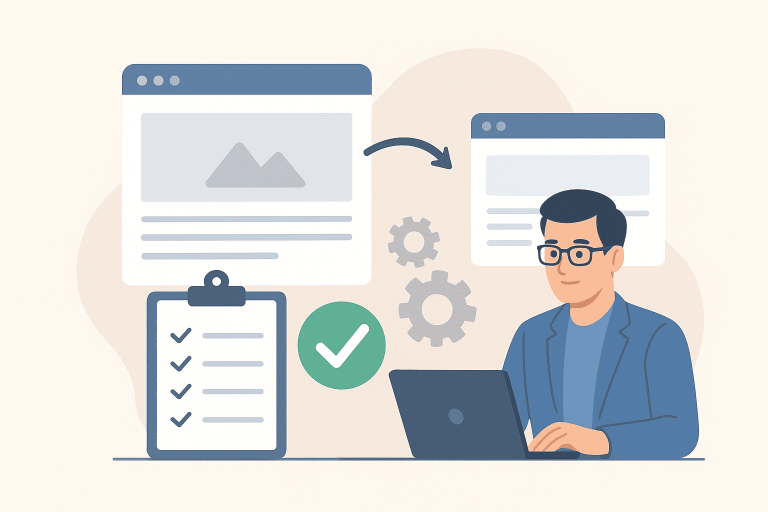
Good web design acts as an intuitive map for the customer. It organizes information, creates visual hierarchy, and uses UX techniques to reduce cognitive overload.
Effective practices include:
-
Visual clarity: fewer on-screen elements, with focus on the main action.
-
Smart e-commerce filters: allowing customers to quickly find what they need.
-
AI-powered personalization: suggesting relevant products or content, avoiding distraction.
-
Strategic CTAs: instead of dozens of buttons, one main conversion path.
-
User-centered design: flows that respect the natural journey from search → interest → decision.
This way, design doesn’t just make a website beautiful — it works as a facilitator for smarter choices.
Artificial Intelligence in the Customer Journey
AI applied to web design is becoming a powerful differentiator. For example:
-
Personalized recommendations based on browsing history.
-
Smart chatbots that remove doubts and decision barriers.
-
Real-time behavior analysis, adjusting the experience as the user navigates.
This makes the customer feel that the site “understands their needs” — without extra effort to find what they’re looking for.
How NWD Applies These Principles
At Niteroi Web Design (NWD), we know that less can mean more when it comes to conversion. That’s why our projects use:
-
UX (User Experience) principles to design simple and effective interfaces.
-
Data analysis to identify friction points in the customer journey.
-
AI integration to personalize recommendations and streamline navigation.
-
A/B testing to validate which elements truly increase conversion rates.
Our goal is to help businesses reduce digital complexity and boost results.
Conclusion
The paradox of choice proves that offering too many options doesn’t necessarily win customers. The secret lies in guiding, simplifying, and personalizing the online journey through intelligent design and technology.
With NWD’s expertise in UX, data, and artificial intelligence, your business can turn hesitant visitors into satisfied customers.