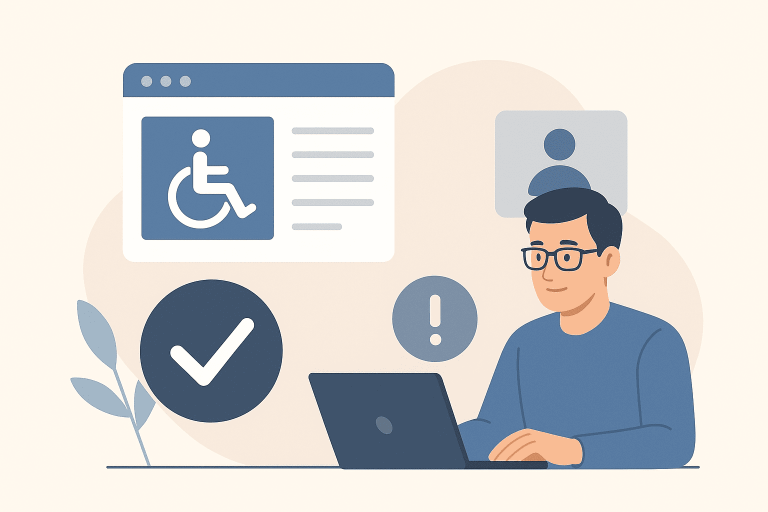

Is your website truly welcoming to everyone? In today’s digital landscape, accessibility isn’t just a buzzword—it’s a fundamental right. Ignoring Web Content Accessibility Guidelines (WCAG) means excluding a significant portion of your audience.
Discover how implementing WCAG standards can transform your web design, ensuring a seamless and inclusive experience for all users. Dive in to build a web that works for everyone.
Understanding WCAG: The Foundation of Web Accessibility
The Web Content Accessibility Guidelines (WCAG) represent a globally recognized set of recommendations. These guidelines are designed to make web content more accessible to people with disabilities. They serve as a crucial benchmark for digital inclusion.
Developed by the World Wide Web Consortium’s (W3C) Web Accessibility Initiative (WAI), WCAG has evolved significantly. Versions like WCAG 2.0, 2.1, and 2.2 reflect ongoing efforts to address diverse user needs. This ensures adaptability in an ever-changing digital landscape.
At its core, implementing WCAG standards for accessible web design is about fostering inclusive digital environments. It ensures that everyone, regardless of ability, can perceive, understand, navigate, and interact with the web. This commitment benefits all users.
Key benefits of adopting these standards include:
- Enhances user experience for everyone, not just those with disabilities.
- Promotes legal compliance in many jurisdictions worldwide.
- Drives innovation in design and development practices.
- Upholds the fundamental right to equal access to information.
These guidelines are the bedrock of creating a truly universal web. They empower developers and designers to build websites that are robust, perceivable, operable, and understandable for the widest possible audience.
The POUR Principles: A Deep Dive into WCAG Guidelines
Implementing WCAG standards for accessible web design fundamentally relies on the POUR principles. These four core tenets – Perceivable, Operable, Understandable, and Robust – form the bedrock of digital inclusivity.
Each principle guides how we approach web accessibility guidelines, ensuring a richer user experience for everyone.
Perceivable
Information and user interface components must be presentable to users in ways they can perceive. This means not relying solely on one sense.
- Provide text alternatives for non-text content (e.g., alt text for images).
- Offer captions and other alternatives for audio and video content.
- Ensure sufficient color contrast for text and graphics.
Operable
User interface components and navigation must be operable. Users must be able to interact with the content.
- All functionality should be keyboard accessible.
- Provide users enough time to read and use content.
- Avoid content that could cause seizures or physical reactions.
Understandable
Information and the operation of the user interface must be understandable. Content should be predictable and consistent.
- Use readable text and straightforward language.
- Design predictable navigation and consistent layouts.
- Help users avoid and correct errors with clear instructions and feedback.
Robust
Content must be robust enough that it can be interpreted reliably by a wide variety of user agents, including assistive technologies.
This ensures digital content remains accessible as technology evolves. Using proper HTML semantics and ARIA attributes is key here.
Implementing WCAG Standards for Accessible Web Design
Implementing WCAG standards for accessible web design is essential for creating truly inclusive digital experiences. These guidelines provide a robust framework, ensuring web content is perceivable, operable, understandable, and robust for everyone.
Developers and designers play a crucial role in this process. Integrating web accessibility from the outset prevents costly retrofits and enhances the user experience for all, including those relying on assistive technologies.
Start by understanding key WCAG success criteria. Focus on Level AA compliance, which is a widely accepted industry target. This involves specific considerations.
Key areas to address include:
- Keyboard navigation must be fully functional and intuitive.
- Alternative text should be provided for all non-text content.
- Color contrast ratios need to meet minimum requirements for readability.
- Clear and consistent navigation ensures users can easily find information.
Effective techniques for compliance involve using semantic HTML, proper ARIA attributes, and thoughtful responsive design. Prioritizing these accessibility best practices ensures your website serves a broader audience.
By consistently applying these principles, you contribute significantly to a more equitable and accessible web. This commitment to inclusive design ultimately enhances overall usability for every user.
Tools and Techniques for WCAG Compliance Auditing
Achieving WCAG compliance requires a systematic approach to auditing. Implementing WCAG standards for accessible web design involves using a combination of tools and manual techniques to ensure broad coverage and accuracy.
Automated accessibility checkers are an excellent starting point. Tools like Lighthouse, WAVE, and AXE DevTools can quickly identify common violations, such as missing alt text, insufficient color contrast, or incorrect ARIA attributes. They provide an initial snapshot of your site’s accessibility health.
However, automated tests only catch about 30-50% of issues. A thorough manual review process is crucial. This includes keyboard navigation testing, checking logical heading structures, and verifying clear link text. Human judgment is essential for evaluating context and usability.
User testing with assistive technologies offers invaluable insights. Working with individuals who use screen readers (e.g., JAWS, NVDA), screen magnifiers, or voice control ensures real-world accessibility. Their feedback directly highlights barriers often missed by other methods.
Common pitfalls to avoid during these compliance checks include relying solely on automated tools. Also, overlooking dynamic content updates or failing to test complex user flows can lead to accessibility gaps. Comprehensive auditing is key to successful accessibility.
WCAG and SEO: Boosting Organic Traffic Through Accessibility
Implementing WCAG standards for accessible web design isn’t just an ethical imperative; it’s a powerful strategy for enhanced Search Engine Optimization (SEO). A clear, symbiotic relationship exists between digital accessibility and improved organic traffic.
Search engines prioritize websites that offer a superior user experience. Many core aspects of WCAG compliance directly contribute to this, making your site more appealing to both human visitors and algorithms.
Consider how accessible design practices naturally enhance your SEO efforts:
- Improved Site Structure: Clear, logical navigation and proper heading hierarchy (a WCAG principle) make content discoverable for both users and search engine crawlers.
- Better Content Readability: Adhering to contrast ratios, legible fonts, and clear language (key for accessibility) encourages longer visits and reduces bounce rates.
- Semantic HTML: Using correct HTML elements for structure and meaning (essential for screen readers) provides richer context for search engines to index your content.
- Optimized Multimedia: Including descriptive alt text for images and accurate captions for videos not only serves users with disabilities but also offers valuable SEO keywords and context.
By diligently implementing WCAG standards, businesses can achieve significantly better search rankings. This leads to increased organic visibility and attracts more users, particularly within the competitive American market. Ultimately, accessible web design is a catalyst for improved SEO and a better experience for every visitor.
Building an Accessible Future: Beyond Basic Compliance
Achieving true digital inclusion extends far past ticking boxes. While implementing WCAG standards for accessible web design is foundational, the real long-term value emerges when accessibility becomes part of an organization’s core development culture.
This cultural shift fosters significant benefits.
- Fostering Innovation: Designing for diverse needs often sparks creative solutions. It pushes teams to think outside conventional frameworks, leading to innovative features that benefit all users, not just those with disabilities.
- Expanding Market Reach: An accessible website or application naturally broadens your audience. You tap into a significant user base, including people with disabilities and the aging population, greatly increasing your potential market share.
- Enhancing Brand Reputation: A commitment to accessibility elevates your brand. It signals social responsibility, trust, and a user-centric approach, building stronger loyalty and a positive public image.
- Continuous Improvement: Accessibility is not a one-time project. Embedding it into daily workflows ensures ongoing evaluation and enhancement, moving beyond minimum requirements towards genuine digital inclusivity for everyone. This proactive approach secures a resilient, future-proof digital presence.
Embracing an Accessible Future
Adopting WCAG standards is more than just meeting compliance; it’s about fostering a truly inclusive digital world. By prioritizing accessibility, you not only expand your reach and enhance user experience but also future-proof your web presence and boost your SEO.
Ready to make your website accessible to all? Share your thoughts and experiences in the comments below, and help us spread the word about the importance of accessible web design!